Why Biomaterials Break During Commercialization

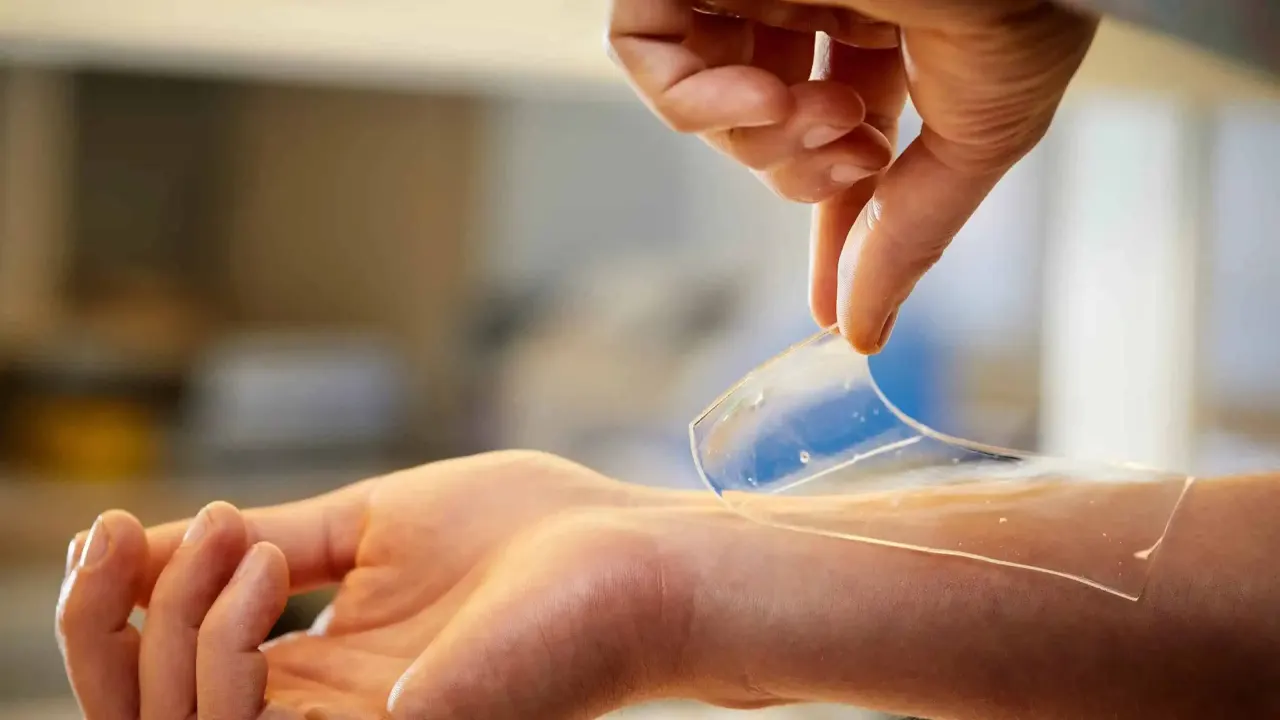
An FDA-approved hydrogel sealant can swell up to 50% in any dimension.
That sounds useful. A sealant needs to expand into small gaps and create a barrier.
It can also be dangerous.
DuraSeal’s FDA labeling warns that the swelling can compress neural tissue when the material is used in a confined bony space. That same swelling can help form a seal in one setting and create a safety risk in another.
A research paper can report that a hydrogel swelled by a certain percentage.
A product team needs to know much more:
- How fast did it swell?
- How much did it expand in each direction?
- How long did the swelling last?
- How did sterilization change it?
- What happens inside the geometry where a clinician will actually use it?
That gap is where many promising academic biomaterials run into trouble.
Two different finish lines
Biomaterials research often starts with an important question:
Can this new material do something useful?
Maybe it releases a drug in response to pH. Maybe it supports cell growth. Maybe it closes a wound faster than an existing dressing.
Once the result is clear and the mechanism is interesting, there may be enough for a paper.
Commercialization starts asking a different set of questions.
- Can another person make the same material?
- Can the team make it at a larger volume?
- Will a new raw-material lot behave like the old one?
- Can it survive sterilization, storage, and shipping?
- Can every finished batch stay inside a defined range?
I spent years in academic and hospital labs repeating biomaterials protocols to produce paper-ready data. I don’t say that dismissively. Discovery matters, and academia is where most of these materials begin.
But I became frustrated with where the work stopped.
A paper could finish the project for the lab. For a patient, it would have been the beginning.
That was a big part of why I left my PhD. I didn’t reject academia. I wanted the technology to reach people sooner.
Reproducibility gets harder as a program grows
In 2016, Nature surveyed 1,576 researchers about reproducibility. More than 70% said they had tried and failed to reproduce another scientist’s experiment. More than half said they had failed to reproduce one of their own.
That was a voluntary survey across scientific fields, so it isn’t a biomaterials failure rate. Still, it points to a reproducibility problem commercial teams have to solve.
If a result is difficult to reproduce inside a research lab, moving toward production introduces even more variation:
-
New operators
-
New equipment
-
Larger mixing volumes
-
Different raw-material lots
-
Sterilization
-
Packaging and storage
-
Shipping conditions
-
Clinical handling
During scale-up, a material can appear to change because the original experiment didn’t isolate the variables controlling its behavior.
Soft biomaterials make this especially difficult because they’re dynamic. They flow, swell, degrade, absorb liquid, release drugs, and change stiffness over time.
The manufacturing process helps determine what the material becomes.
“Alginate” is not a complete specification
Alginate is one of the most familiar polymers in biomaterials. Researchers use it in hydrogels, cell encapsulation, drug delivery, wound care, and bioprinting.
A methods section might describe a formulation as “2% alginate.”
That shorthand may be enough for a reader to follow the experiment, but a product team needs a much tighter specification.
A peer-reviewed study examined variability across pharmaceutical-grade sodium alginate. Across ten batches of one commercial grade, calcium content ranged from 0.36% to 0.73% by weight. Intrinsic viscosity ranged from 6.53 to 7.80 dL/g, and the researchers also found statistically significant differences in viscoelastic behavior.
Those differences can affect how the material mixes, pumps, injects, prints, and crosslinks.
So a commercial specification has to go beyond the polymer name and concentration. The team may need to define the supplier, grade, lot controls, viscosity range, composition, water content, ionic content, and acceptance limits.
A polymer name tells you what’s in the container, but it doesn’t tell you how that lot will behave in your process.
The test can change the answer
Even a controlled formulation can produce inconsistent data when the measurement process changes.
Take rheology, which researchers use to measure how injectable hydrogels flow and deform.
A published ACS protocol warns that overfilling the rheometer geometry can overestimate mechanical values. Underfilling can underestimate them. Air bubbles, incomplete mixing, sample volume, geometry, calibration, temperature, and loading technique can all affect the result.
Two labs can begin with the same nominal formulation and report different behavior because the samples were loaded differently.
For soft materials, measurement is part of the experiment.
This is why standard operating procedures, calibrated instruments, automated handling, and validated methods matter. Standard operating procedures, calibrated instruments, automated handling, and validated methods define how a product is measured and released.
The product includes everything that touches the material
Apligraf shows how far this goes.
Apligraf is a living, bilayered skin substitute that received FDA approval in 1998. The biology is impressive, but commercializing living tissue also created an unusual manufacturing and clinical workflow.
According to its FDA prescribing information, Apligraf was aseptically manufactured and could not be terminally sterilized. It shipped after a preliminary 48-hour sterility test, while the final result used a 14-day incubation. The product stayed in nutrient medium and had to be used within five minutes of opening.
Apligraf’s workflow shows how many operational constraints the team had to solve.
They had to manage viability, sterility, storage, shipping, timing, and the clinician’s workflow alongside the material itself.
The commercial product included far more than the biological mechanism described in a paper.
What commercialization-ready development looks like
SpaceOAR shows what those controls look like in a commercial development program.
SpaceOAR is a PEG-based hydrogel system designed to create temporary space between the prostate and rectum during radiation therapy.
The FDA’s De Novo review describes testing of the final manufactured and sterilized device. The program evaluated gel time, pot life, swelling, in vitro disappearance, packaging, and shelf life. The evidence supported a 24-month shelf life and included a clinical study of 222 subjects at 20 sites.
The team commercialized the formulation as part of a full system:
- The formulation
- The mixing and delivery equipment
- The sterilization process
- The usable time window
- The swelling and disappearance profile
- The package and shelf life
- The clinical procedure
The chemistry remained central, but it had to work with every process around it.
The layer between a paper and a product
I originally entered biomaterials because I wanted to help build smarter therapies.
Then I spent years watching promising materials move through slow, manual development processes. A formulation could look great in a paper and still lack the testing infrastructure needed to become a reliable product.
At GelTech Labs, we spend most of our time in that middle layer.
Soft materials are difficult to handle without tearing, shearing, or deforming them. Manual conditioning can mix operator variation into the material signal. Results then end up spread across instruments, notebooks, and spreadsheets.
Our core work at GelTech Labs is handling these materials consistently and capturing how they behave under controlled conditions.
Carousel can run six formulations in parallel around the clock, across different pH and temperature conditions, while collecting continuous swelling and degradation data. Carousel addresses one part of the path: generating more consistent data under controlled conditions.
That helps development teams connect each formulation and process condition to the behavior they actually measure.
Over time, I want that loop to cover the whole path: design the material, make it, test it, and assemble the evidence needed to move it toward regulatory submission.
Before calling a biomaterial product-ready, I think teams should be able to answer five questions:
- Can we specify the raw material?
- Can we reproduce the manufacturing process?
- Can we measure the critical behavior without the operator changing the answer?
- Can the material survive sterilization, storage, shipping, and delivery?
- Can we define an acceptable range and show that every batch stays inside it?
If a team can explain why a material worked but can’t explain how they’ll make and measure it again, the science may be promising.
The product work has barely started.
If you’re developing a soft biomaterial and trying to turn it into a repeatable product, I’d love to connect and learn what you’re working on.
First published on LinkedIn.