
Learn
Guides on testing hydrogels and other soft biomaterials, and Sinan Gölhan's newsletter on the science behind them.
Guides
Method guides and checklists for planning a study, from the GelTech Labs team.
-
Pilot study and buying
How a biomaterials pilot study worksWhat a biomaterials pilot study is, which decision it should settle, how one runs from first message to dataset and report, how to size it, and what its data can't support.

-
Release testing for long-acting injectables
In vitro release testing for long-acting injectable depotsHow to design in vitro release testing for a long-acting injectable depot: the decision it serves, then method, medium, sampling, recovery, discrimination, and how far the data can carry toward IVIVC.
-
Polymer and carrier degradation
Polymer degradation testing in drug delivery depotsHow polymer degradation is measured in a drug delivery depot: what molecular weight, dry mass, wet mass, erosion and mechanics each answer, where ASTM F1635 fits, and why wet and dry mass can move in opposite directions.
-
Release testing for long-acting injectables
Sink conditions in release testingHow to calculate a sink ratio for a long-acting injectable release study, what a ratio of 3 or 10 costs in driving force, where the usual multiples come from, and where a depot can saturate anyway.
-
Pilot study and buying
Study brief and scoping checklist for biomaterials testingAn eight-item study brief for a biomaterials testing study, with a sample preparation checklist and a guide to what you can leave out until an NDA is in place. Use it on this page.
-
Release testing for long-acting injectables
Dissolution testing of soft biomaterials, and where USP <711> fitsHow to run dissolution testing on a soft biomaterial when the dosage form swells and degrades, why the basket and paddle were built for tablets, and what weighing the material shows that sampling the medium can't.


Newsletter: Hydrogel Science & Innovation
A curated space for hydrogel scientists and enthusiasts, by Sinan Gölhan. Subscribe on LinkedIn
- Magnetic Biomaterials: Medicine You Can Control From Outside the Body
Most biomaterials are programmed before they enter the body. Their stiffness is set. Their degradation rate is set. Their drug-release profile is set.
- Why Biomaterials Break During Commercialization
An FDA-approved hydrogel sealant can swell up to 50% in any dimension. That sounds useful. A sealant needs to expand into small gaps and create a barrier.
- Biomaterials Testing Barely Changed in 30 Years
Biomaterials testing is still mostly done by hand. Walk into a drug discovery lab and the screening runs itself. Robots move liquids across 384 and 1,536-well plates, around the clock, throwing off millions of clean data points.
- How Hydrogels Are Turning Deserts Into Forests
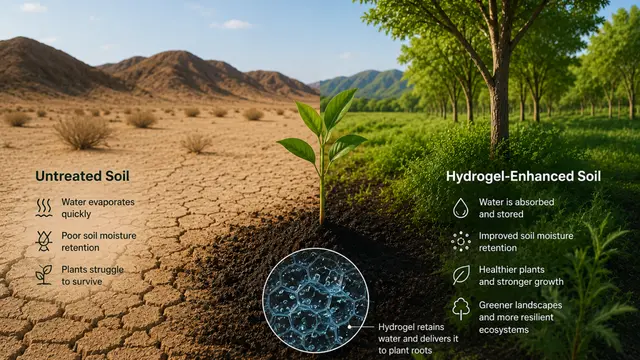
Deserts have one fundamental problem: They cannot retain water. In arid environments, rainfall evaporates quickly or drains beyond the reach of plant roots. Sandy soils often have extremely poor water retention, making long-term vegetation growth difficult without constant irrigation.
- Could Jellyfish Be the Future of Wound Healing?
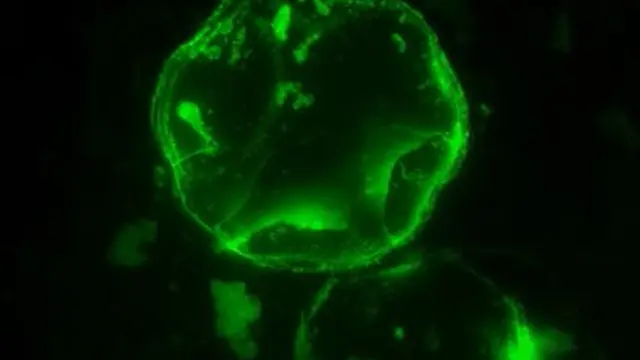
Jellyfish are mostly water. In fact, their bodies are about 95% water, held together by a soft biological matrix called mesoglea. Structurally, this matrix behaves very similarly to what scientists call a hydrogel.
- Hydrogels: The Future of Wound Care
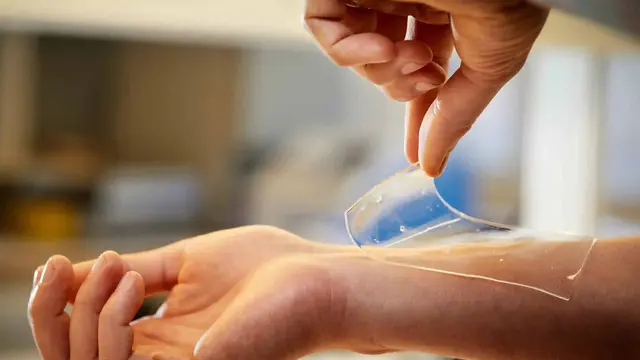
Every year, millions of people suffer from chronic wounds. Diabetic ulcers. Burns. Pressure injuries. Surgical wounds.
- Hydrogels: The Spacesuit of the Future
Space isn’t empty. It’s full of energetic particles moving fast enough to damage electronics and living tissue.
- Hydrogels are the AI of biomaterials
At first glance, it sounds like hype. Hydrogels don’t run code. They don’t train neural networks. They don’t “think” in the way software does.


Talk to the team
Seeking guidance on formulation or R&D strategy? The first consultation is on us. Tell us what you're working on.